Leadership Development
Your Leadership Doesn't Need Another Conference Room
We keep asking leaders to think differently while putting them in rooms designed to make everyone think the same.
We keep asking leaders to think differently while putting them in rooms designed to make everyone think the same.
I was scrolling LinkedIn when I saw it.
You know the room.
Sleek black curtains. Giant event letters. Maybe a carefully engineered balloon installation that somehow says both celebration and Series B funding.
Everything has that blue-white conference glow. Bright enough to interrogate someone under.
And cold.
So fucking cold.
As someone who has facilitated more professional development than I could reasonably count, I understand the temperature. Speaking in front of people makes almost everyone sweat — seasoned speakers, first-timers, executives, facilitators. Humans have pores. Crank the air and you protect the one person on the stage.
But when you're sitting in the audience for eight hours?
It's brutal.
Then I noticed the rest of it.
The name tents. The giant sticky-note paper waiting patiently for the breakout session. The branded notebook. The hotel coffee. The banana nut muffins.
And I had this incredibly simple thought:
Is this really the best environment we've come up with for teaching humans how to lead?
Day Three smells like defeat
You know the smell by the morning of Day Three. Coffee. Too many people. Somebody's lunch. That vaguely stale conference-room air that wasn't there Monday morning but absolutely exists now.
Everyone has settled in.
And it smells like it.
By Day Three, the room has won. The agenda has won. The breakout that was supposed to surface bold new thinking has produced six sticky notes that say some version of better communication. The facilitator is performing gratitude. The participants are performing engagement. Everyone is performing.
Nobody is actually thinking. The environment is not designed for it.
The psychology of being back in a classroom
Here's a thing we don't talk about enough. Put accomplished adults in rows facing a PowerPoint and watch what happens. People who run companies, budgets and teams suddenly start behaving like they're waiting for permission to go to the bathroom. The room says: you are a student now. The knowledge is up there. You are down here. Receive.
And they do. Because the environment is older and louder than their résumé. They raise their hands. They do the icebreaker. They endure the "turn to your neighbor" exercise that has never once turned a neighbor into a better leader.
I have watched extraordinary executives fold themselves into obedient little rectangles the second the ballroom doors close. It is genuinely something to behold.
Forced participation is not the same as engagement
Somewhere along the way, "everyone participates" became the metric for a successful program. If you can get the quiet VP to talk, you've won.
No. You've gotten the quiet VP to talk. That's it. Whether the talking was useful, whether it changed anything, whether it survived the Uber back to the airport — those are different questions, and they're the only questions that matter.
Forced participation teaches people to perform participation. It does not teach them to lead. Often it teaches them to dread the next offsite, which is the opposite of what we're billing.
The cognitive toll nobody counts
A full day of programming — six to eight hours of content, breaks, networking, hotel lunch, an evening reception — is not a full day of learning. Some of that time is learning. Some is listening. Some is social performance. Some is trying to remember the name of the person you met at breakfast. Some is wondering what exploded in Slack while you were discussing strategic influence.
And some of it is simply being tired.
We ask leaders to absorb frameworks about decision-making while removing every one of the conditions under which they actually make good decisions: autonomy, rest, control of their time, distance from the urgent.
We can develop leaders in these rooms. I have for twenty years. My question is why we're making the room another obstacle the learning has to overcome.
Where rigor and misery got married
Somewhere, rigor and misery got married.
Leadership development should be rigorous. It should challenge what you believe about yourself. It should give you feedback you may not particularly enjoy receiving. It should make you examine behaviors that have probably worked well enough to get you promoted.
That's the hard part.
The hard part doesn't also need to be the chair.
Or the temperature.
Or six consecutive hours of content.
Or networking until 9 p.m.
Comfort doesn't make development unserious. And suffering isn't evidence that something worked.
Two decades in the ballroom
I've been the person on the stage and the person in the chair. I've built the agendas and rolled my eyes at them. I've done extraordinary work in conference rooms. I've watched people have real breakthroughs in them. I've taught programs I still believe in.
And I've also watched excellent work happen despite the environment rather than because of it. I've watched the very best frameworks die in the very worst rooms — not because the content failed, but because the environment ran out the clock on the human's ability to receive it.
That's the distinction I couldn't stop thinking about.
And the longer I did this work, the more one question refused to leave me alone:
What if the environment wasn't something leadership development had to overcome?
What if, instead of designing programs that have to fight their own room, we designed the room — and the days, and the silence, and the distance — to be part of the development itself?
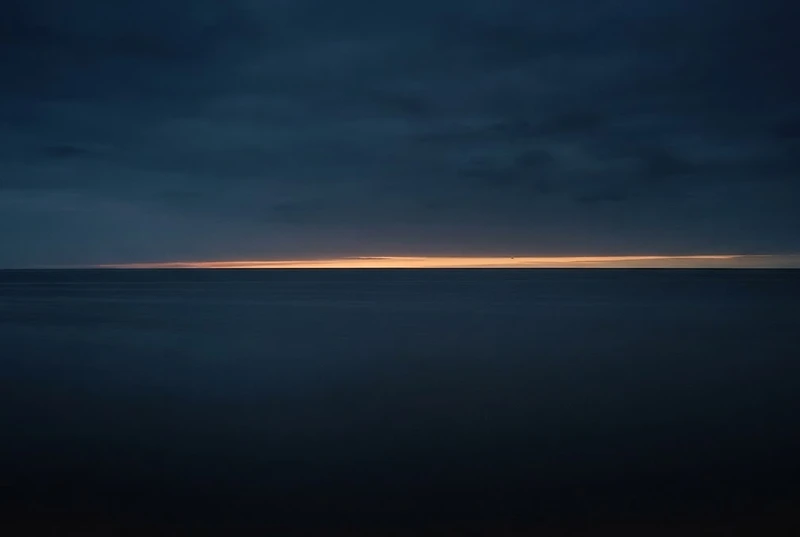
Then a ship
I started thinking about environments that already do what we wanted the ballroom to do. Create real distance from normal roles and schedules. Give people autonomy over their own time. Put them somewhere new. Let them rest, move, be quiet, be with people without being assigned to be with people.
A voyage does something a conference rarely can: it creates distance without requiring isolation.
You can still answer the email.
The difference is that, for once, you don't have to.
And when being available stops being required, something quieter comes back — your own thinking.
So this became SAIL
I didn't create SAIL because I wanted to put leadership development on a cruise ship.
I created it because after twenty years of doing this work, I couldn't stop asking a different question:
What would leadership development look like if we designed around the human doing the developing first?
SAIL still has rigor. There is assessment. Feedback. Private coaching before, aboard and after the voyage. There is work to do.
But there is also autonomy.
Sleep.
Dinner that isn't networking unless you want it to be.
Time when nobody is asking you for the answer.
Space to notice what happens when you stop being useful for five minutes.
And yes, a balcony overlooking the ocean.
I refuse to apologize for that part.
Because after twenty years in leadership development, I've stopped believing that the fluorescent lights were helping.
Maybe the room was never neutral.
Maybe where we ask people to think differently matters.
And maybe leadership development can be serious without making the people doing it miserable.
That's the experiment behind SAIL.
— Tara Furiani
About the author
Tara Furiani is the founder of SAIL Leadership and creator and host of Not the HR Lady. She spent more than two decades leading, designing and facilitating work around people, leadership and organizational development — and eventually started questioning the rooms we kept putting all of it in.
Meet Tara Furiani →